Highway 41 south of Hanford runs flat and open for long stretches, past cotton ground and almond blocks, with real gaps between anything that looks like a business. It is an easy drive right up to the moment the range estimate stops being a number and starts being a problem. When an electric car runs out of charge, almost nothing about the fix resembles a gas car running dry. Nobody can carry a can out to you, and the car cannot be hooked to a wrecker and dragged to the nearest outlet. It has to be carried to a charger on a deck. Here is what that actually involves on a Kings County road.
Key Takeaways
- An electric car that reaches zero has to be transported, not refueled at the roadside.
- Tesla's instructions for transporters say a flatbed is the recommended method and that all four tires must be off the ground.
- Caltrans has put DC fast chargers on Route 41 at Kettleman City and on Route 99 at Kingsburg, Tulare, Fresno, Madera and Delano.
- A DC fast charger adds roughly 100 to 200 miles of range in half an hour. A standard household outlet adds about five miles an hour.
- California had roughly 69,921 public charging ports against about 1.84 million registered electric vehicles in 2025.
- On a county road the number that matters is miles to the nearest fast charger, not the percentage on the dash.
What happens to an electric car as the battery runs down?
An electric car does not stop the way a gas car does, all at once and without warning. The pack is monitored continuously, so the warnings start early, the car begins reserving what is left, and power and climate control are cut back before the motor finally refuses to turn.
That staged shutdown is useful, because it is the window in which you still get to choose where the car stops. A driver who keeps going on the last reserve is handing that choice to the road.
There is one more thing worth knowing. The twelve-volt system that runs the lights, the hazards and the door locks is separate from the big pack under the floor, but it is kept topped up by that pack. Once the main battery is finished, the small one is on borrowed time, and a car that cannot show hazard lights on an unlit county road at dusk is a different problem from a car that simply will not drive.
None of this is fixable by pushing. There is no clutch to drop and no engine to turn over, so a push moves a very heavy object a few feet and no further.
Why can't a tow truck just hook it up and go?
Because most electric cars are not built to roll along a highway with their wheels turning and the drive motor connected to them. The manufacturers are blunt about it. Tesla's instructions for transporters state that a flatbed truck or comparable transport vehicle is the recommended method, that the vehicle must be transported with all four tires off the ground, and that the tires must be unable to spin at any point during transport.
The same page allows dollies under all four wheels as a limited alternative, and caps that method at 35 miles. It also warns that damage caused by improper transporting is not covered by the warranty, and that the high-voltage components should be assumed to be energized before the car is moved at all.
The practical result is simple. An electric car with an empty pack is a flatbed job, and the deck-versus-hook question that matters for ordinary cars barely applies. That comparison is worth reading for a gas car.
Say the word electric when you call. It decides which truck leaves the yard, and sending the wrong one costs everybody an hour.
Where are the closest fast chargers to Hanford?
Not in Hanford, for the most part. Caltrans has installed DC fast chargers on the corridors rather than in the towns between them. Its own announcement of those chargers names Route 41 at Kettleman City, out at the Interstate 5 end of Kings County, along with Route 99 locations at Kingsburg, Tulare, Fresno, Madera and Delano. Caltrans describes those units as Level 3 DC fast chargers giving about eighty percent of a charge in thirty minutes, with universal connectors, and says charging is free with no time limit.
Read that list against a map and the shape of the problem appears. The chargers sit on Interstate 5 and on Highway 99, the two north-south corridors that bracket this county. Hanford, Lemoore, Armona, Corcoran, Stratford and Avenal all sit in the middle, on Highway 43, Highway 41 and Highway 198.
There are public chargers in town, and more of them every year. The point is not that the county has none. It is that the fast ones, the kind that turn a stop into a twenty-minute delay rather than an overnight stay, sit on routes a local trip may never touch.
Can anyone bring a charge out to the roadside?
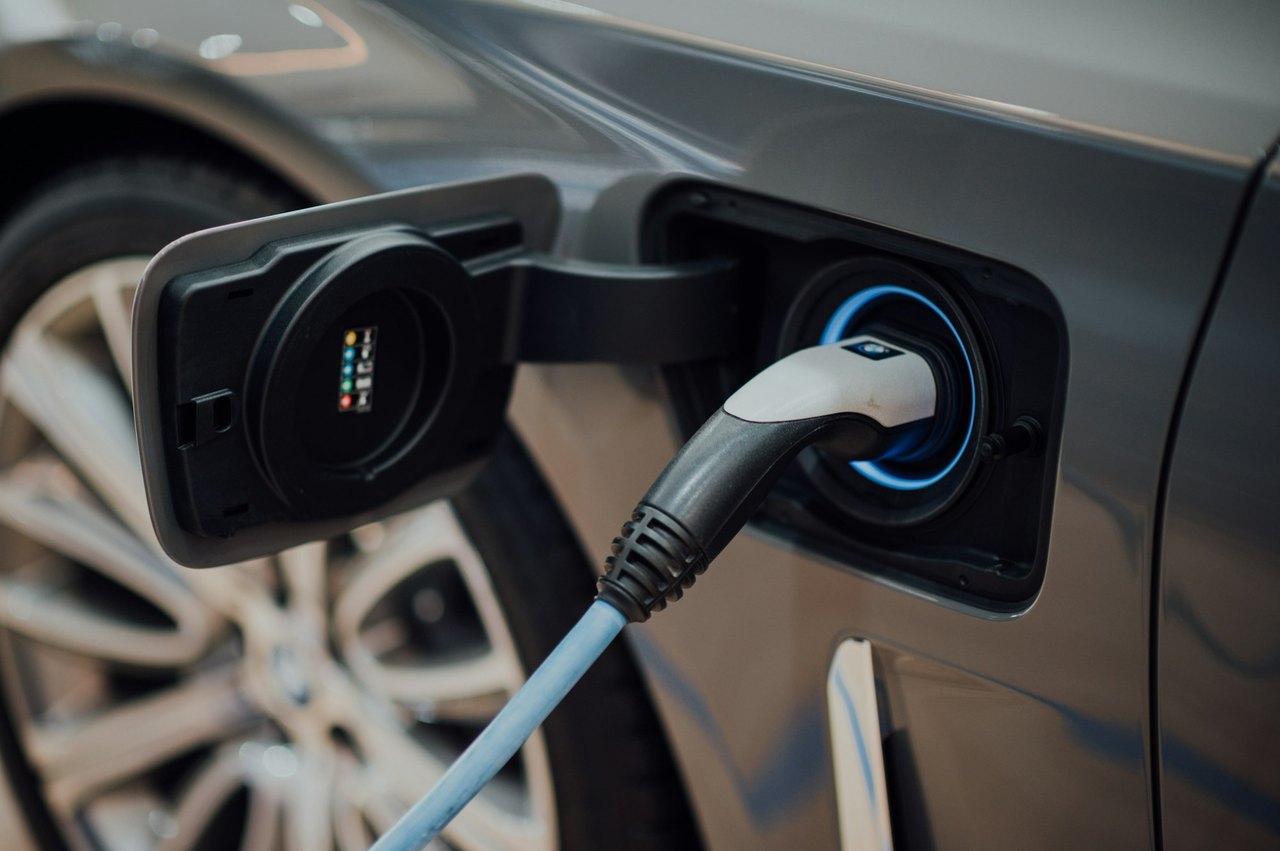
Not in any form that gets you home soon. The Department of Energy's Alternative Fuels Data Center puts the three charging levels in order, and the spread between them is enormous. A 120-volt outlet, what it calls Level 1, delivers roughly five miles of range per hour of charging. Level 2, the equipment most public and workplace chargers use, delivers about twenty-five miles per hour. DC fast charging delivers roughly 100 to 200 or more miles of range in thirty minutes.
The same source puts total charging time anywhere from under twenty minutes on a DC fast charger to twenty hours or more on Level 1.
Portable roadside charging, where it exists at all, lives at the slow end of that scale. An hour parked on the shoulder of Highway 43 buys a handful of miles, rarely enough to reach a fast charger, and it is a long hour on an unlit road. Loading the car and driving it to a charger is almost always quicker.
What makes an electric breakdown different in Kings County?
The gaps here are longer than the statewide numbers make them sound. California genuinely leads the country on this. The U.S. Energy Information Administration found the state accounted for 37 percent of registered light-duty electric vehicles and 27 percent of charging locations at the end of 2022, with more than four times as many charging locations as the next state. The Alternative Fuels Data Center puts California at roughly 69,921 public charging ports against about 1.84 million registered electric vehicles in 2025.
Those ports are not spread evenly. They follow population and traffic, which in this part of the state means the corridors and the bigger cities.
A driver crossing Kings County on Highway 43 or Highway 41 can be twenty-five or thirty miles from the nearest fast charger with nothing in between but field roads and canal banks. That is an unremarkable drive in a gas car. In an electric car at eight percent it is the difference between a short delay and a tow. Either way, it is worth knowing who actually responds when a car stops on a Kings County highway.
How do you keep from reaching zero out here?
Plan around the chargers rather than around the range estimate. The estimate is a forecast built from how the car has been driven recently, and a run down Highway 41 at highway speed on a hot afternoon with the air conditioning working is not the driving it has been averaging.
Four habits do most of the work:
- Know where the nearest DC fast charger is before leaving, not after the warning appears.
- Treat twenty percent as the floor on a county road, not ten. The reserve is there to get you somewhere, and somewhere can be far apart out here.
- Have a second charger in mind. A single unit can be occupied, blocked by a parked car or out of service, and discovering that at four percent is a tow.
- Keep the mobile cable in the car. It will not rescue you on the shoulder, but it turns any ordinary outlet at a friend's place or a shop into an overnight option.
The Mile Count Matters More Than the Percentage
When the warning appears on a road between towns, the percentage on the dash is the less useful of the two numbers in front of you. The one to act on is the distance to the nearest fast charger and whether the route there is a corridor or a county road. If that distance is larger than the range reading, the decision is already made, and the only question left is whether you stop somewhere with a parking lot and a phone signal or somewhere the car chose for you. A Level 2 charger at a hotel is an overnight plan, not a rescue.
If the pack is already empty and the car is sitting still, it is a deck job from that point on. Hanford Towing Service runs flatbed towing and emergency towing across Kings County around the clock, and the dispatcher only needs to hear that the car is electric to send the right truck.