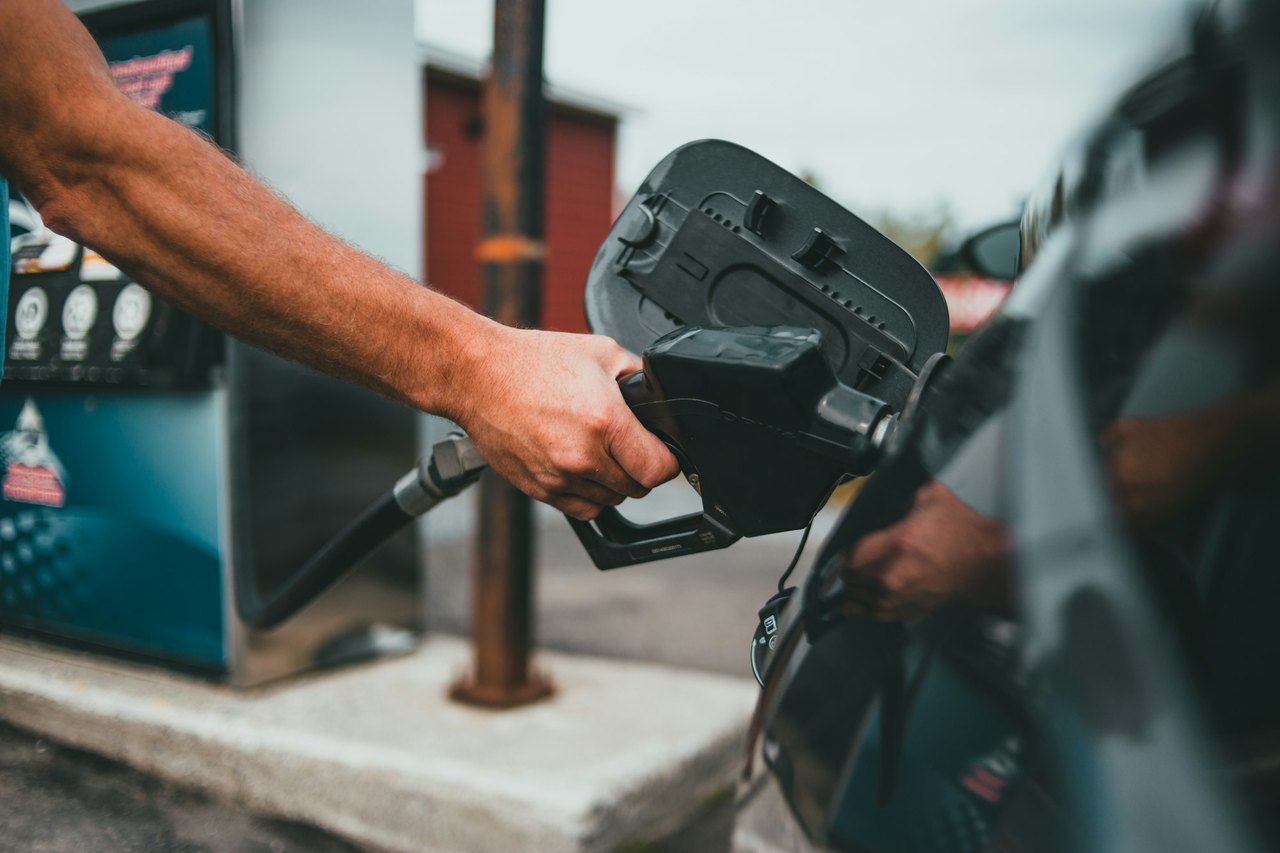
Six on a weekday morning at a station off Lacey Boulevard, and the car ahead of you has a work truck's habits. Plenty of households around Hanford run two fuels at once: a diesel pickup that goes out to the fields or down Highway 41, and a gas car that does the school run and the drive into Visalia. Most mornings the hand reaches for the right handle. Some mornings it does not, and the first sign is a nozzle that went in without the usual resistance.
If that has just happened to you, one thing decides what it costs. Fuel sitting in a tank is a drain-and-flush job. Fuel that has been pumped through an injection system is a repair bill. Everything below is organized around that split.
If You Have Not Started It Yet, Keep It That Way
Leave the key out of the ignition and out of the start button. On most modern vehicles, switching the ignition on runs the in-tank pump before the engine ever fires, and that is the moment wrong fuel stops being a tank problem and starts being a fuel-system problem. Set the parking brake, tell the attendant so the lane can be worked around.
Then call it in for what it is. A wrong-fuel job and a no-start sound similar on the phone and are not the same dispatch: one needs a truck that can load a vehicle which must not be run, and a shop told in advance to expect a contaminated tank. A vehicle that never started usually rides in on a deck rather than being hooked and dragged, so flatbed towing is the normal answer here, and the flatbed versus wheel lift comparison covers why that choice is not always obvious. If the car is blocking an island at a busy hour, that is an emergency tow, not a next-morning errand.
If Gasoline Went Into a Diesel, That Is the Direction That Hurts
This is the common mistake in farm country, because a gasoline nozzle slides into a diesel filler without complaint while the reverse usually does not fit. It is also the expensive one, and the reason is that diesel does more in a diesel engine than burn. It also lubricates.
Oak Ridge National Laboratory puts it plainly in its work on diesel fuel lubrication: the injector and pump systems contain many sliding interfaces that rely on the fuel itself for lubrication, and poor lubricity leaves the injector vulnerable to scuffing damage that severely limits engine life. Gasoline is a thinner solvent. Introduce it into a high-pressure injection system built around the oiliness of diesel and the metal-to-metal contact those clearances were never designed to survive begins immediately.
A pump that ran dry of proper lubrication can shed material into the lines, the rail and the injectors. Diesel pickups, farm trucks and service rigs are also the vehicles most likely to need heavy duty towing rather than a light-duty hook, so mention the vehicle class when you call.
If Diesel Went Into a Gas Car, the Car Will Tell You Quickly
This direction is rarer, because a diesel nozzle is physically larger than the filler neck on most unleaded vehicles, and it takes real effort to make it work. It happens anyway.
A gasoline engine lights its fuel with a spark, and diesel does not cooperate. It does not vaporize readily at ambient temperature and it resists ignition from a spark plug, so what you get is a hard start, heavy white smoke, a rough misfire and then a stall. The engine is not usually destroyed by it the way a diesel injection pump is, but the diesel coats the inside of the fuel system, soaks into the filter and fouls the plugs, and none of that leaves on its own.
Do not try to burn it off. Running the engine to empty the tank pushes the contamination further through the system every minute it runs. The tank still has to come down or be pumped out, and the only question is how much of the system is contaminated by the time that happens.
If What Went Into the Tank Was DEF, Say So on the Phone
Diesel exhaust fluid earns its own paragraph in diesel-pickup country, because its filler is often right next to the diesel filler and the jug lives in the same bed as the fuel can. It is also a documented failure mode rather than shop folklore. A Nissan technical service bulletin for the 2016 to 2019 Titan XD with the Cummins 5.0L diesel, published through the federal vehicle safety database, tells owners to be extremely careful to put the appropriate fluid or fuel into the appropriate tank and notes that the damage may cause a no-start.
Two details from that bulletin are worth carrying to any make, not just that one. The first is that contamination is diagnosed by inspection, which is another argument for not running the engine and spreading it. The second is that the manufacturer treats this as owner error, so the bulletin states the repair is not covered by the new vehicle warranty. Neither fact gets better with time, and both are reasons to have the truck moved rather than started.
If the Pump Was Labeled E15, Check What You Are Filling First
Not every wrong-fuel problem involves two different liquids. Ethanol content is the quieter version.
The Department of Energy's Alternative Fuels Data Center sets out who may use E15: flexible fuel vehicles, and conventional vehicles of model year 2001 and newer. Its prohibited list is longer and much more familiar out here. All motorcycles. All vehicles with heavy-duty engines, such as school buses and delivery trucks. All off-road vehicles, such as boats and snowmobiles. All engines in off-road equipment, such as chain saws and gasoline lawn mowers. All conventional vehicles older than model year 2001.
The federal rule behind that list came from the Environmental Protection Agency in 2011, which prohibited gasoline containing more than ten percent ethanol in any vehicle, engine or equipment not covered by the waiver and required E15 dispensers to carry a label saying the fuel is only for model year 2001 and newer motor vehicles. Read it, especially when the thing being filled is an older farm truck, a generator, an orchard sprayer or the red can riding in the bed.
If You Think the Pump Was Wrong and You Were Not, Document It Before Anything Moves
Occasionally the driver did everything right and the dispenser did not. California does regulate that end of it. The state Department of Food and Agriculture runs the program that assures minimum quality standards for most automotive products, gasoline and diesel included, and regulates how those products are advertised and labeled.
Enforcement lands locally, and the local part has a distinctly Valley shape to it. Every California county must have an agricultural commissioner and a sealer of weights and measures, and in this county both sit inside the same office: the Kings County agriculture department works as the county's measurement standards authority under the state Division of Measurement Standards. The people who inspect the scales at a packing house also stand behind the numbers on a dispenser in town.
So before the vehicle leaves, build the record where it happened. Keep the receipt, photograph the dispenser number and the grade label on its face, note the time. Hanford Towing Service runs across Kings, Tulare and Fresno counties, and the area this company covers spans three different county sealers, so make the record in the county where the fuel was bought.
Wrong-Fuel Questions Kings County Drivers Ask
Can I top the tank off with the correct fuel and drive it?
No. Dilution does not undo contamination: the wrong fuel is already in the tank and will be drawn through the system the moment the engine runs. In a diesel in particular, lubrication is a property of the fuel rather than a quantity you can average out. The repair is to remove what is in there and flush what it touched.
It is only a few blocks to the shop. Is a short drive really a problem?
Running the engine is precisely the step that moves the wrong fuel out of the tank and into the parts that cost money. A short drive is not a small version of the problem; it is the problem. That is the whole reason this is a round-the-clock tow rather than something that waits for business hours.
What if it was only a splash?
There is no roadside way to measure the fraction, and no published threshold a driver can apply at a pump island. Treat any gasoline in a diesel tank as a drain, and let the shop decide what the system needs after it looks.
Can a tow truck drain the tank on the spot?
Draining and flushing is shop work, not roadside work, and contaminated fuel has to be captured and disposed of properly. Fuel delivery solves an empty tank, which is a different job entirely. For a wrong-fuel call the truck is there to move the vehicle, with the engine never started, to the place that can do the rest.