Can we take the trailer up to see the big trees? It sounds like the kind of question that needs an opinion. It does not. The National Park Service publishes the answer as a set of numbers, and past a certain length the road up from Highway 198 stops being a matter of confidence behind the wheel.
Sequoia is close enough to Kings County to be a half-day trip. The park's own driving directions put the Ash Mountain entrance 36 miles and about 45 minutes from Visalia, and Hanford sits west of Visalia on the same Highway 198. That nearness is what catches people out. The drive begins on flat Valley farmland that asks nothing of a vehicle, and within a few miles of Three Rivers it becomes one of the more demanding stretches of pavement in California. What the road publishes about itself decides the rest.
The Numbers That Decide What You Can Bring
Five numbers do most of the deciding before you ever turn the key.
- Vehicles longer than 24 feet are not advised between the Foothills Visitor Center and Potwisha Campground.
- Vehicles longer than 22 feet are not advised from Potwisha up to the Giant Forest Museum, and single vehicles over 40 feet are prohibited on that stretch.
- The Generals Highway carries an incline of about 5,000 feet over a few miles, across a 16-mile section built in the early 1920s.
- There are no gas stations, no EV chargers and no repair shops inside the parks.
- The 22-foot advisory applies to tow trucks as well, which is the detail most visitors never think about until they need one.
Measure the Vehicle Before You Pick an Entrance
Measure bumper to bumper, hitch and bike rack included, and the number you get decides your route rather than your schedule. The Park Service's oversized vehicle guidance advises against vehicles longer than 24 feet between the Foothills Visitor Center and Potwisha Campground, and against anything longer than 22 feet from Potwisha up to the Giant Forest Museum. Single vehicles over 40 feet are prohibited there outright.
Those are advisories rather than gates, and that is the trap. Nobody stops a 30-foot motorhome at Ash Mountain. The road does the stopping, further up, at a hairpin with a rock wall on one side. The Park Service is blunt about why the limits exist: longer vehicles cross the double yellow line and put oncoming traffic at risk, and drivers are held responsible for any hazardous conditions their own choices create.
If your vehicle is over the number, the answer is not to try it anyway. It is to use the other door. The Big Stump entrance on Highway 180 is the park's preferred route for longer vehicles, described in its own directions as straighter, less steep and wider. It is a longer drive from Hanford and a far easier one, and it is the route any heavy duty towing operator would pick for the same reason.
Treat the Climb as a Different Road From the One You Started On
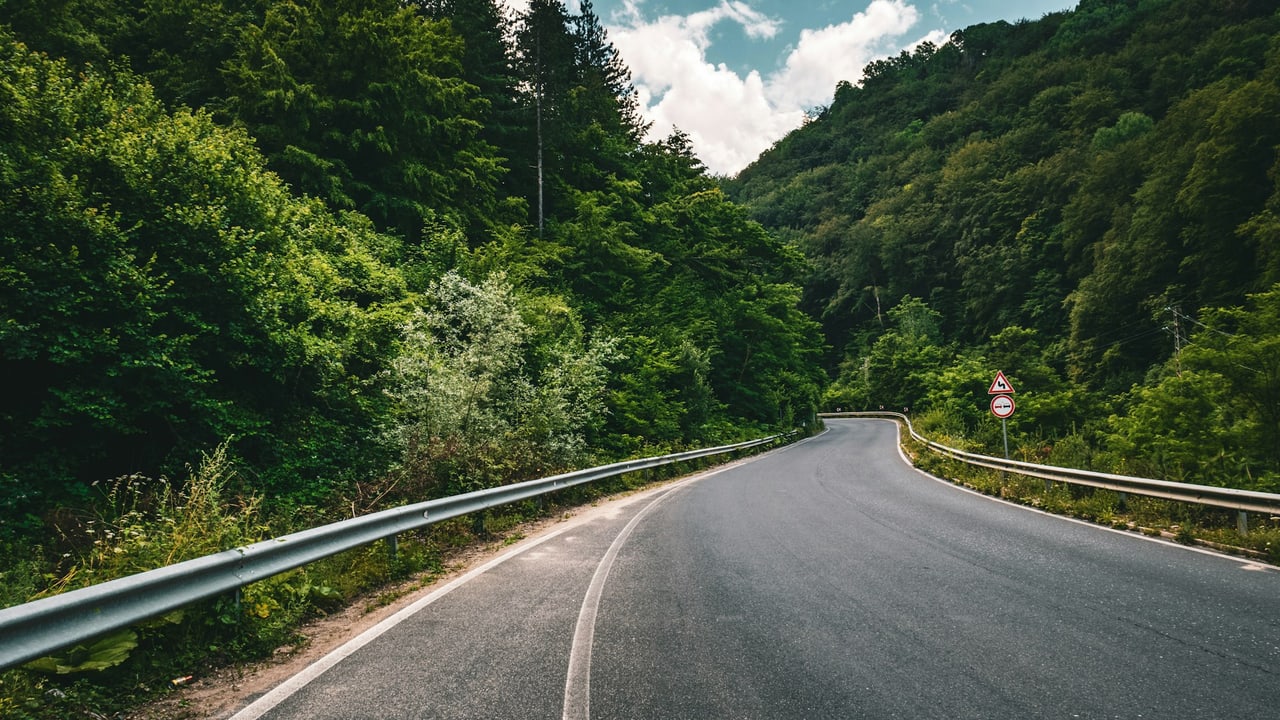
Highway 198 enters the park at Three Rivers, and the Park Service's description of what happens next is short: beyond the entrance station, the road is narrow and winding. The Generals Highway then does something no Valley road does. It carries many hairpin turns and an incline of roughly 5,000 feet over a few miles, along a 16-mile section built in the early 1920s to standards nobody designs to now.
A car that has spent its life between Hanford and Visalia has never asked its cooling system for sustained full load, and has never asked its brakes to hold weight downhill for twenty minutes at a time. Both get asked here, in the same afternoon.
Sustained climbing is where a marginal cooling system stops being marginal. If the temperature gauge starts moving on the way up, the response is the same one that works at home, and what to do when your car overheats sets out the order. The difference up here is that there is no wide farm-road shoulder to pull onto, and no second lane for traffic to use while you sort it out.
The descent is its own discipline. Low gear, selected early and held, does the work that a foot resting on the brake pedal for twenty minutes cannot.
Fill Up in the Valley, Because the Park Has No Pumps
There are no gas stations, no electric vehicle charging stations and no repair shops inside Sequoia and Kings Canyon. That is the Park Service's own wording. Fuel and emergency vehicle services are available nearby on national forest land, where the stations are limited and seasonal.
Nearby is doing real work in that sentence. The Sequoia National Forest covers over 1.1 million acres across three Central California counties, and a pump somewhere inside it is not a pump where you are.
Treat the last Valley fuel stop as the one that has to cover the round trip. A climb of several thousand feet and a long descent use more than the map's mileage suggests, and an electric vehicle gives up range on the way up faster than it wins it back coming down.
Running dry on the Generals Highway is a different problem from running dry on Lacey Boulevard. Fuel delivery is a short job inside the area this company covers and a much longer one above Three Rivers.
Check the Road Before You Leave, Not at the Gate
Two agencies own the two halves of this drive, and each publishes conditions separately.
For everything outside the park boundary, including Highway 198 itself, Caltrans road information takes a highway number and returns current conditions, and the same information is available by phone on 1-800-427-7623.
For everything inside, the park runs a 24-hour recorded road conditions line on (559) 565-3341, press 1 and then 1 again, and tells visitors to check its road conditions page before heading in.
Checking both takes two minutes in Hanford, and it is the only way to learn that a section of the Generals Highway is shut, that traffic is being held between Giant Forest and Highway 180, or that the entrance queue on a summer Saturday has backed cars up onto the approach.
Ignore the Shortcut Your Phone Offers
A routing app optimizes for time, and the Park Service has had to publish a warning about what that produces here. Its directions tell drivers to avoid routes that send them onto unpaved roads, which may be rugged, gated or closed seasonally, and which can leave a vehicle stuck and damaged somewhere remote.
Mineral King Road catches Hanford drivers in particular, because it leaves Highway 198 right at Three Rivers and looks like a legitimate turn. It is extremely narrow, winding and unpaved in places. Single vehicles over 40 feet are prohibited, and RVs and trailers are not advised on it at all.
A sedan on a rutted forest road is the same recovery job as a sedan on a soft Kings County turnout, only much further from the yard. It is the winch out and recovery work this site describes in getting stuck on a farm road, with the drive time multiplied.
Know What a Tow Looks Like Up There Before You Need One
One line in the park's oversized vehicle guidance deserves more attention than it gets: the 22-foot limit applies to tow trucks as well.
Read that properly and it changes what a breakdown above Potwisha means. The road that will not comfortably hold your motorhome will not comfortably hold the wrecker big enough to move it either. Recovery up there gets staged rather than simply dispatched.
In practice a disabled passenger car usually comes down on a flatbed, because flatbed towing keeps the drivetrain off the road for the whole descent. Larger vehicles need equipment matched both to the weight and to the turn radius, which is a heavy duty towing question rather than a routine one.
The destination matters too. A car that quits at Giant Forest is not going to a shop around the corner. It is coming back down to the Valley, which makes it long distance towing rather than a cross-town call. Coverage is patchy up there, so note the park's conditions number and a 24/7 dispatch line before you lose signal rather than after.
The Road Decides What You Bring, Not the Other Way Around
All of it comes down to two things settled in a Hanford driveway rather than at the Ash Mountain gate: a measurement and a full tank. If the vehicle is longer than 22 feet, the live question is which entrance to use, not whether the advisory really means it. If it is shorter, the live question is whether the cooling system and the brakes are in the condition a 5,000-foot climb assumes they are.
Do both and Sequoia is what it should be from here, an easy morning's drive from the Valley floor to the big trees.
When it does not go that way, and a vehicle will not restart at a turnout or has to come off the mountain and back down to the Valley, emergency towing and long distance towing from Hanford Towing Service cover the gap between where it stopped and where it needs to be.